Why Aether Exists
Aether did not begin with a business plan.
It began with three operators, working in different worlds, repeatedly encountering the same problem.
Founders were becoming the bottleneck inside the very companies they had built. Teams were working harder but gaining less leverage. Growth was increasing complexity faster than operational structure could absorb it.
And across every environment, the same truth kept emerging:
Leadership without authority creates invisibility.
Authority without systems creates dependency.
Systems without leadership create chaos.
Over time, those observations converged into something larger.
One of the strongest structural forms in architecture is the triangle. Not because of any single side — but because each side reinforces the others under pressure.
That became the foundation of Aether.
Leadership
Architecture
Authority &
Execution
AI Systems &
Infrastructure
Aether exists because modern founders do not need more noise, more tactics, or more disconnected tools. They need architecture strong enough to hold growth under pressure.
Where the Worldview Emerged
The Environments
Leadership Architecture
Acquisition-stage fintech environments, distributed national organisations under coordination pressure, and founder-led scaling systems repeatedly exposed the same operational bottlenecks.
Authority & Execution Systems
Audience-driven ecosystems and authority-based growth environments revealed how quickly execution fragments when communication systems fail to scale with complexity.
AI Systems & Infrastructure
Enterprise infrastructure systems and production AI environments demonstrated that operational reliability is architectural long before it becomes technological.
The Recurring Patterns
- —Founder dependence calcifying into structural constraint
- —Leverage fragmentation disguised as complexity
- —Coordination pressure creating invisible execution debt
- —Authority breakdown when systems fragmented
- —Infrastructure drift accumulating without visibility
- —Interpretation gaps widening between data and decision
Convergence
Three operators from different operational worlds independently encountered the same structural realities �� not because they shared a framework, but because reality kept forcing the same conclusions into visibility.
The patterns were not invented. They were observed, repeatedly, until they became impossible to ignore.
Three Domains
One Pattern
Codification — The Path Forward
01
Observation
Recurring structural patterns across distinct environments
02
Pattern Recognition
Same pressures emerging independent of sector or scale
03
Codification
Language, doctrine, frameworks, books, field studies
04
Operational Ecosystem
Architecture for founders navigating structural forces




The Operators
Three operational domains. The worldview emerged from where their independent observations converged.
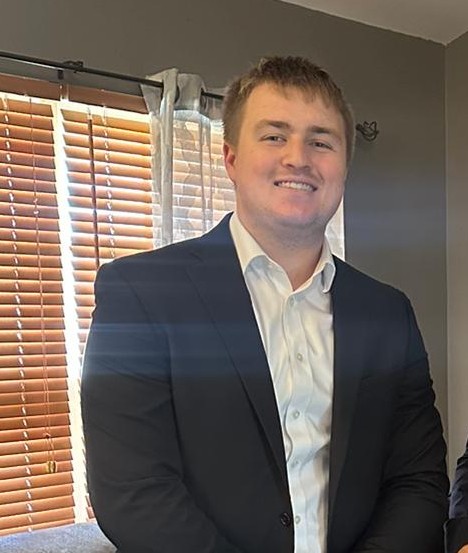
Nathan built inside environments where execution was the daily reality, audience-driven ecosystems, founder-led growth systems, and architectures where communication at scale determined whether a company held momentum or stalled. Inside AI-powered infrastructure generating 300M monthly views and systems delivering 6x revenue growth through structural rebuild rather than headcount, the same pattern showed up every time: the founder was the system. Every deal. Every follow-up. Every quality call. When authority lives in one person instead of the system around them, the organisation doesn't compound, it just runs harder.
His domain inside Aether is the execution layer where that changes: go-to-market architecture, sales infrastructure, audience systems, and the operational machinery that makes a founder's standards hold without their hand on every lever.
“Authority doesn't fragment because markets shift. It fragments when execution systems lose structure faster than one person can hold it together. The fix isn't more effort, it's architecture that holds.”

Anjal built inside environments where the distance between a working demo and a production system was where most projects died. Inside AWS infrastructure serving millions globally, across 40+ AI implementations and $10.5M in production systems where failure had real consequences, the same pattern repeated: the constraint was never the technology. It was the architecture behind the technology.
Systems didn't fail because someone stopped paying attention. They failed because the architecture assumed something never made explicit: missing fallback logic, undefined security boundaries, integration points held together by optimism. The assumption was invisible until the environment changed.
His domain inside Aether is the reason the ecosystem is not purely strategic. Every leverage architecture has an infrastructural floor and whether that floor holds under pressure is determined at the point of design, long before it becomes a technology problem.
“Ninety percent of AI projects die after the demo. The ones that survive had architecture, not just capability.”
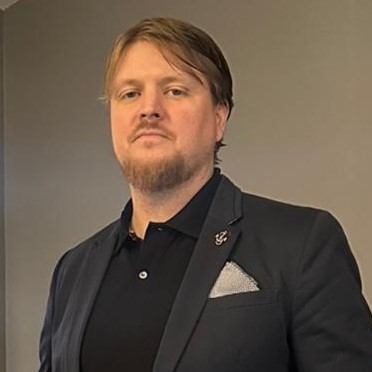
Adam built inside environments where the founder was the architecture. Acquisition-stage fintech under nine-figure pressure, organisations scaling 10x under coordination strain, and legacy brands navigating structural transition inside a $450M acquisition environment. Across every one, the pattern repeated: growth stalled not because of market, but because the founder had never separated their identity from their execution systems.
The recurring observation ran deeper than execution. How a business communicated was not a marketing function. It was the infrastructure through which trust either compounded or silently eroded. Operational drag was never a complexity problem. It was a clarity problem disguised as one.
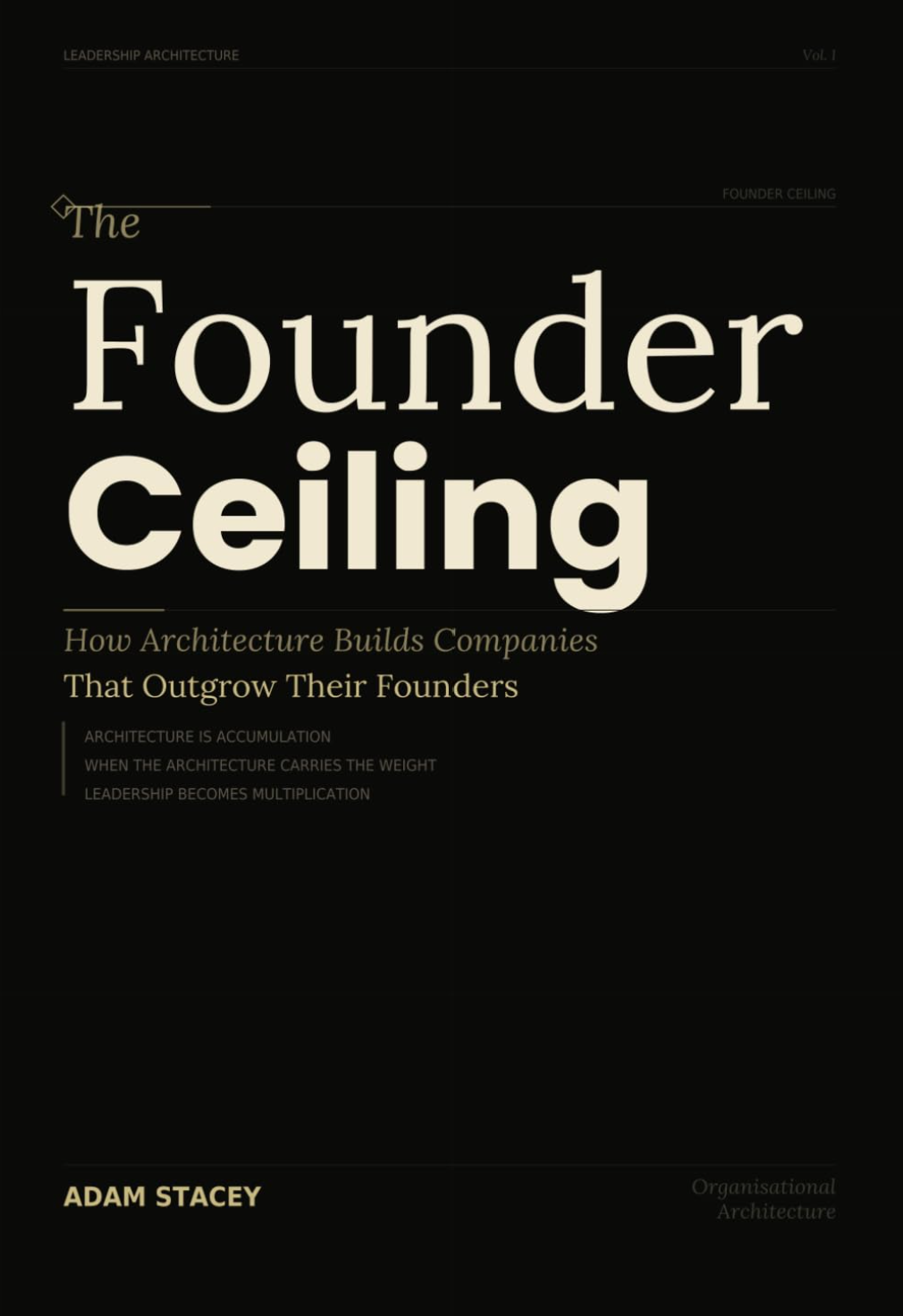
Where Nathan observed execution fragmentation and Anjal observed infrastructural reality, Adam recognised the recurring pattern across environments and codified it. The Founder Ceiling. The Architect's Principles. The operational ecosystem those observations became.
“Founders do not hit capability ceilings. They hit architectural ones, where identity, communication, and operating structure begin limiting the next stage of growth.”

Intellectual Foundations
01
Stage 1
Diagnosis
The Founder Ceiling
Identifies the structural constraint. The point where founder identity, communication pattern, and operating structure begin limiting the next stage of growth. Not a motivation problem. An architectural one.
View the book →02
Stage 2
Doctrine
The Architect's Principles
Codifies the recurring operational realities behind leverage architecture. Observations from organizational reality, distilled into doctrine for founders navigating transition under pressure.
Read the principles →03
Stage 3
Model
Leverage Architecture
The three-force operating structure — Leadership Architecture, Authority & Execution Systems, AI Systems & Infrastructure — built from the convergence of three independent operational domains.
See the model →04
Stage 4
Methods
3C Storytelling & The 2-6-2 Principle
Applied methods for communication architecture and AI-augmented execution. Clarity, connection, and conviction treated as engineering problems. Two parts human thinking. Six parts execution. Two parts judgment.
Ecosystem Orientation
You've seen where the thinking came from.
The ecosystem is where it becomes operational.
The Operational Positioning Engine interprets where a business sits inside the structural pressures documented here — and routes it toward the appropriate lever. Not through a sales conversation. Through operational intelligence.
Understand Your Position