Authority Systems
Your market trusts you.
That is the problem.
If your company's credibility lives in your name, your voice, and your relationships, then every time you step back, demand steps back with you. That is not a marketing problem. It is an architecture problem. And in an AI world, it compounds faster than most founders expect.
Communication is not marketing. Communication is operational infrastructure.
The companies with sustainable market authority are not the ones with the best campaigns. They are the ones with the clearest systems.
The AI Problem
Without the right framework,
AI produces inconsistency at scale, not trust at scale.
AI has made content production nearly free and distribution nearly instant. Without a clear authority system and a defined message, AI does not build trust at scale. It produces inconsistency at scale.
A founder without a clear story, a defined customer, and a repeatable message uses AI to create more content that all says something slightly different. Each piece is polished. None of them compound. The market sees volume without clarity, which reads as noise, not authority.
The founder ends up correcting the AI constantly, which is the opposite of the independence an authority system is supposed to create. In an AI content world, clarity is the competitive advantage. Without the framework, AI accelerates the confusion.
AI amplifies whatever communication architecture is already there. If that architecture is founder-dependent, AI deepens the dependence.
The Aether Method
The 3C Framework.
The communication architecture of founder independence.
Clarity
Knowing exactly what you do, who it is for, and why it matters, stated simply enough that the whole team can repeat it. Without Clarity, no message holds across channels, team members, or AI tools. Every piece of content starts from scratch rather than compounding from a shared foundation.
Connection
Communicating that clearly so the right customers feel it. It is the story that pulls aligned buyers toward the business. The key distinction is the hero question: the customer is always the hero of the story. The company is the guide.
Most founders make themselves the hero, which keeps the authority anchored to them personally rather than transferring to the company. When the company becomes the guide, authority can travel without the founder.
Conviction
The proof that turns attention into belief and belief into commitment. It is the evidence, the demonstration, the consistency over time that makes a market trust a company rather than just a person. When Conviction is built into the system, the company earns trust without the founder needing to be present for every signal.
When 3C is installed across the business, a founder can step back and the message holds. AI tools produce content that compounds rather than contradicts. Demand becomes structural rather than personal.
The Outcome
An authority system the business carries
without the founder's daily presence.
A message that holds, a story that attracts, and trust that compounds. The market's relationship is with the company, not just you. When you step back, the demand does not step back with you.
Positioning that holds without the founder. Messaging that transfers without degradation. Distribution that compounds without proportional effort.
Field Evidence
Field Observation — Trust Infrastructure
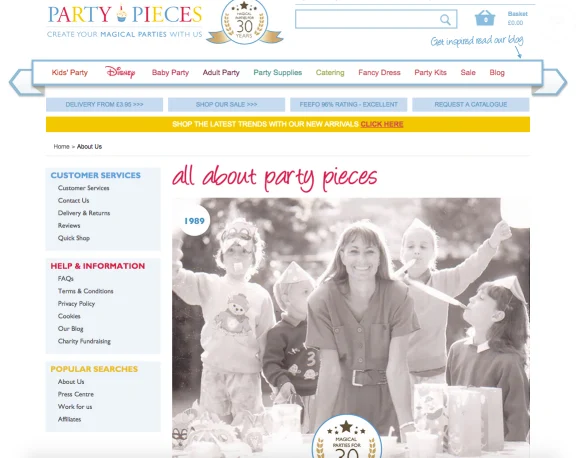
Evidence: Differentiated Trust Systems — Customer Familiarity Architecture
In one organization, the annual catalogue was not a sales tool. It was trust infrastructure. A 300-page document that arrived in homes, was annotated by families, passed between generations, and created a ritual of anticipation.
When modernization pressure led to reducing investment in this channel, the decision appeared operationally rational. But the catalogue was not a cost center. It was the primary mechanism through which the organization acquired and maintained trust. Reducing it weakened the very infrastructure that created differentiation.
Trust Architecture
- Customer familiarity
- Identity continuity
- Differentiation
- Relationship ritual
Modernization Pressure
- Efficiency optimization
- Cost reduction
- Digital transition
- Operational flattening
Trust systems are rarely understood until they are weakened. The organizations that survive modernization are the ones that recognize what their communication infrastructure actually does before deciding to change it.
Start ARC
Start ARC to see where your authority systems currently stand.
ARC identifies where your market's trust depends on your personal presence and which part of the Founder Path fits your next stage.
Start ARC